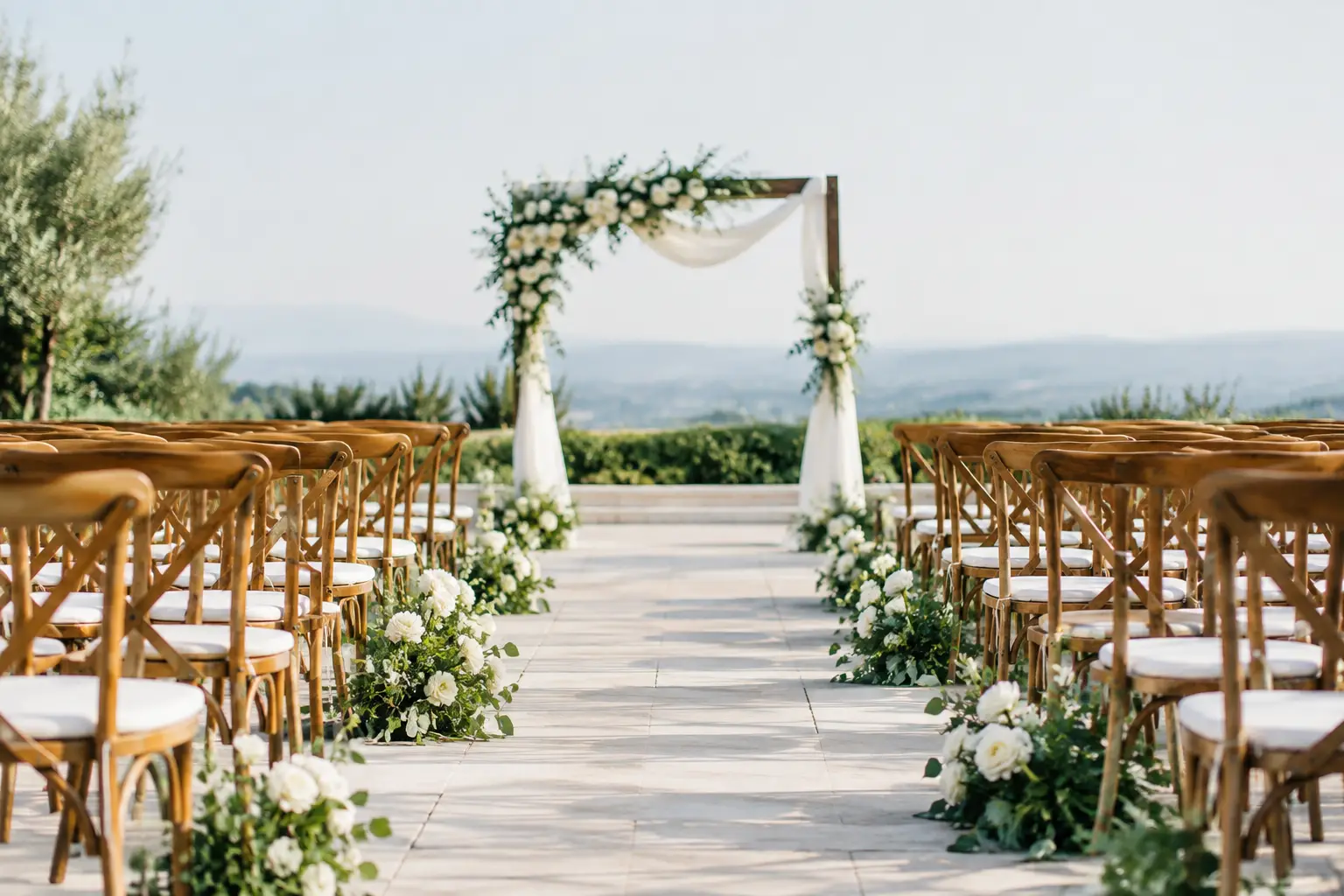
A beautiful ceremony can lose some of its magic when guests are searching for seats, squeezing past knees, or standing where they cannot see the vows. This ceremony seating layout planning guide is designed to help you create a calm, welcoming space where every loved one can settle in, see the moment clearly, and feel part of the celebration.
Your seating plan is more than rows of chairs. It shapes the first impression of your ceremony, guides the processional, supports accessibility, and frames the photos you will treasure for years. Whether you are gathering family in a backyard, a barn, a church hall, or an outdoor venue in Northeast Indiana, thoughtful placement makes the whole event feel more intentional.
Start With the Moment You Want Guests to Feel
Before counting chairs, picture the ceremony from a guest’s point of view. Is it intimate and romantic, with loved ones gathered close around you? Is it formal and traditional, with a grand center aisle and neat, symmetrical rows? Or is it relaxed, colorful, and full of personality?
The answer helps determine whether a classic straight-row layout, a curved arrangement, a semi-circle, or a mixed lounge-and-chair setup feels right. A standard layout is a lovely choice for larger guest counts and traditional processions. A curved or semi-circle arrangement creates connection because guests can see more than the backs of other guests’ heads. It can also feel especially meaningful for smaller celebrations.
There is a trade-off, of course. Curved seating usually requires more space and careful measuring, while straight rows are easier to set, fill, and photograph. Let your venue, head count, and ceremony style guide the decision rather than forcing a layout you saw online into a space that does not support it.
Measure the Ceremony Space Before Choosing Seating
A venue may look spacious when it is empty, then feel surprisingly tight once an arbor, chairs, musicians, and a wedding party are in place. Start with the usable ceremony area, not the entire property or room. Account for the focal point at the front, such as an arch, backdrop, floral installation, or existing altar.
Leave enough room behind the ceremony focal point for the officiant and couple to stand comfortably. Then map the aisle, guest seating, and a clear entrance route. If you are outdoors, consider uneven ground, tree roots, sprinkler heads, sun direction, and what happens if the grass is soft after rain. Indoors, note doors, fire exits, wall heaters, pillars, and any areas your venue needs to keep open.
For most chair layouts, allow roughly 18 to 24 inches of width per guest. A center aisle should generally be at least four feet wide so the wedding party can walk comfortably and photographers can work without disrupting the processional. Side aisles are helpful for larger groups, guests using mobility devices, and a smoother exit after the ceremony.
Do not forget the last row. Leave a comfortable walkway behind it, particularly if guests need to move toward cocktail hour, restrooms, or a reception space. A layout should look lovely from the front, but it also needs to work when 100 people arrive within 15 minutes.
Plan for Visibility, Not Just Capacity
Every chair does not need the same view, but every guest should be able to see and hear the heart of the ceremony. Avoid extremely long, narrow blocks of seating when possible. Guests at the far edges may have to turn uncomfortably, and your ceremony photos can feel disconnected.
If the space is wide, slightly angle the outside sections toward the couple. If it is deep, consider a wider seating arrangement with fewer rows. For a small guest list, resist the temptation to spread chairs too far apart. Bringing people closer creates warmth in the room and makes the ceremony feel full of support.
Think about the sun as carefully as the view. A late-afternoon ceremony with guests facing directly into bright light can lead to squinting, discomfort, and less relaxed photos. If your timing is flexible, shift the ceremony angle or time of day. Shade is welcome, but make sure the couple is not standing in deep shadow while guests sit in harsh light.
Build an Aisle That Feels Meaningful and Practical
The aisle holds a special kind of anticipation. It needs enough space for the processional, but it also serves as a visual pathway toward your promises and your future together. For many couples, a center aisle is the natural choice. It gives guests a clear view of the walk-in and creates a balanced ceremony setting.
A curved aisle can soften a garden, backyard, or outdoor ceremony and complement an arch or backdrop with a more organic shape. Two aisles can be memorable for a large wedding party or a ceremony where the couple enters from separate sides. These options can be stunning, but they require a clear rehearsal plan so everyone knows where to stand and walk.
Keep aisle decor low, secure, and thoughtfully spaced. Ground florals, lanterns, petals, and chair-end accents can add beauty without blocking movement. Tall arrangements placed too close to the aisle can catch dresses, create tripping hazards, or interfere with guests’ views. If children or older relatives will be walking the aisle, simple and open is often the kindest choice.
Reserve Seating With Grace
Reserved seating should make immediate family and honored guests feel cared for, not create confusion for everyone else. Reserve only the seats you truly need, usually the first one or two rows on each side. Too many reserved chairs can leave the front of the ceremony looking empty while other guests are unsure where they belong.
Tradition may suggest one side for one family and the other side for the other family, but modern celebrations rarely need such rules. A warm sign inviting guests to sit wherever they feel comfortable can set exactly the right tone. For blended families, close friends, and supportive communities, shared seating often reflects the love story better than division.
Consider specific needs early. Offer easy-access seats near an aisle for grandparents, anyone with limited mobility, parents holding young children, or guests who may need to step out quietly. If a guest uses a wheelchair, do not treat the accessible space as an afterthought. Make it an intentional part of the layout with a clear view and room for companions nearby.
Plan for Real-World Guest Flow
The prettiest layout is not successful if it creates a bottleneck at the entrance. Think through the full guest journey: parking, arrival, welcome table, seating, ceremony exit, and the walk toward the next part of the celebration.
For outdoor events, a welcome sign can direct guests toward the correct entrance and help them understand whether they should take a program, choose a seat, or wait for an usher. If weather is a possibility, keep umbrellas, water, blankets, fans, or a backup location in mind. In Northeast Indiana, a ceremony plan should be beautiful in sunshine and sensible when the forecast changes its mind.
Allow for vendors, too. Your photographer and videographer need angles that preserve the moment without becoming the moment. Leave a discreet pathway or side space for them to move. Musicians need room for instruments and chairs. Your officiant needs a clear line of sight. These small accommodations prevent awkward rearranging just before guests arrive.
At The Weathered Moose, we believe the best event details are the ones that feel personal while quietly making everyone more comfortable. Coordinating chairs, arches, backdrops, special effects, and the finishing touches through one caring local partner can make setup feel far less overwhelming.
Use Your Layout to Support the Look of Your Ceremony
Seating can either support your design or compete with it. Choose chair styles and colors that work with your ceremony focal point rather than treating them as separate decisions. Warm wood tones can bring softness to rustic, garden, and romantic settings. Crisp white chairs feel fresh and classic. Darker finishes can ground a dramatic, elegant palette.
The front rows deserve a little extra attention because they appear in many ceremony photographs. Consider simple chair accents, a few carefully placed floral moments, or aisle markers that echo your bouquet and arch. You do not need to decorate every chair. Repeating one thoughtful detail often looks more polished than adding too much everywhere.
If you are working within a budget, prioritize the areas guests and cameras will notice most: the ceremony focal point, the aisle, and the first few rows. Comfortable, well-arranged seating with a meaningful backdrop will always feel more special than a crowded collection of unrelated decor.
Rehearse the Layout Before the Big Day
A final walk-through is where your seating plan becomes trustworthy. Stand in several guest seats. Can you see the couple? Is the aisle wide enough? Can the wedding party make their entrances without brushing the chairs? Is there a safe route for guests who arrive late or need to step away?
Confirm who is placing reserved signs, greeting guests, straightening chairs, and moving decor after the ceremony. If your ceremony and reception share a space, decide whether guests will move to cocktail hour while the room is reset or whether the seating will remain in place. A simple timeline protects the peaceful feeling you worked so hard to create.
When the music begins and your favorite people take their seats, they should not have to think about logistics at all. They should simply feel welcomed, comfortable, and close enough to witness the beginning of a memory that will stay with them long after the last chair is folded away.